
Loading...
OFZA Team
Apr 8, 2026
15 minuets
196 Views
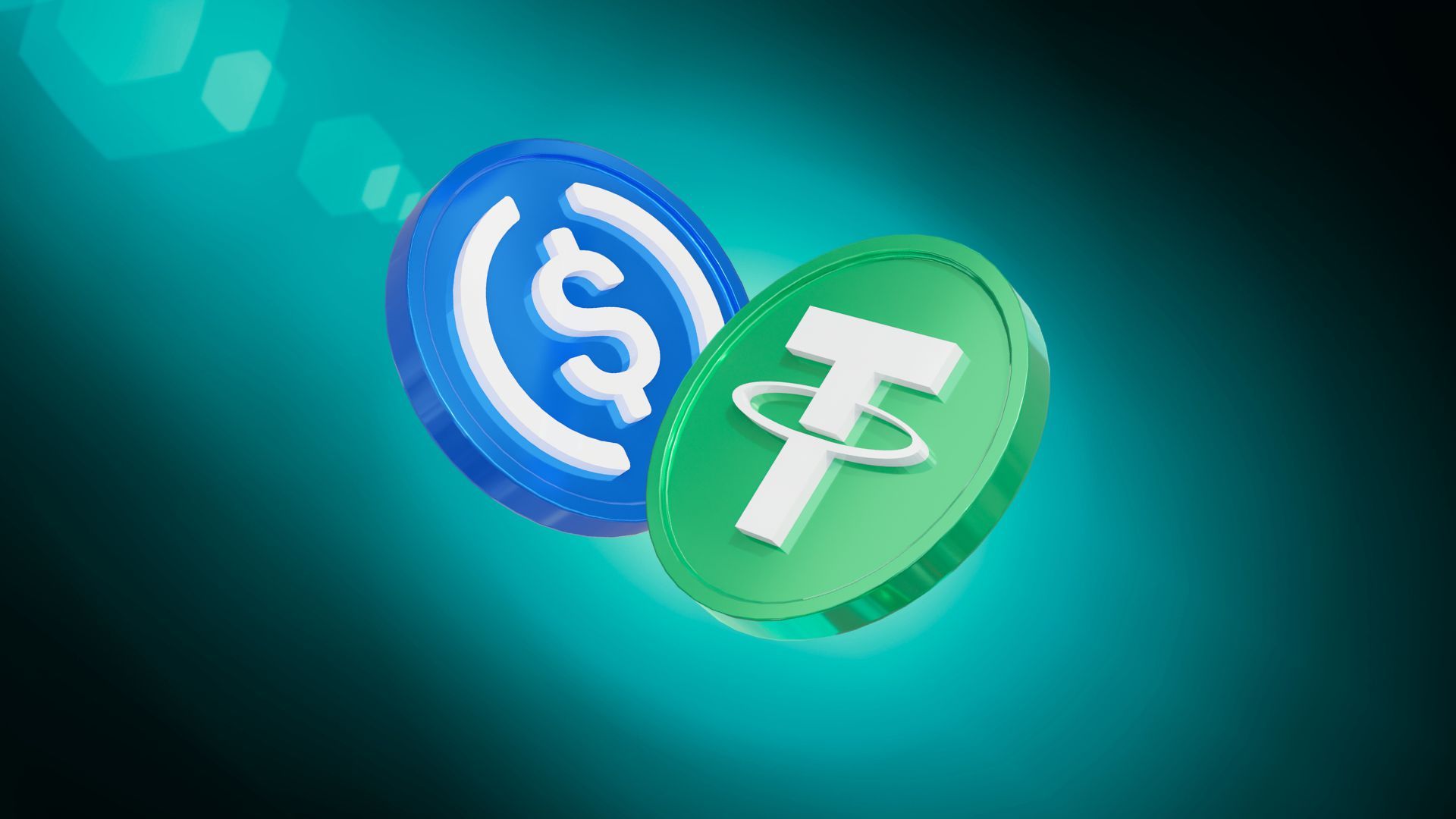
Stablecoins, Settlement, and the New Architecture of Digital Money
What stablecoins are, how USDT and USDC actually differ, what minting means, why on-chain settlement changes the risk equation, and what all of it means in the UAE context.
Money has always moved through infrastructure - and the infrastructure has always determined who wins. The speed, the cost, the risk, the access: all of it flows from the rails underneath. For most of financial history, those rails were built around banks, correspondent networks, and settlement systems designed for a world that no longer exists.
Stablecoins are a new layer of that infrastructure. Not a replacement for what exists, but a parallel architecture with fundamentally different properties: programmable, borderless, available at any hour, settling in seconds rather than days. Back in 2024, when most of the financial world was still treating this as a niche crypto story, Amir Tabch argued in Economy Middle East that stablecoins were already on a trajectory to reshape payments - not someday, but imminently.[1] The data since then is worth understanding. As of March 2026, the total stablecoin market stood at approximately $312 billion in combined market capitalisation,[2] with annual transaction volume reaching $33 trillion in 2025 - a 72% increase on the prior year.[3]
These numbers have moved past the point where stablecoins can be dismissed as a crypto curiosity. They are functioning infrastructure, used at institutional scale, for settlement, treasury management, cross-border payments, and lending. The question is no longer whether they matter. It is whether the people making decisions about capital understand how they actually work.
The starting point is the instrument itself - and the word stablecoin covers more ground than most people realise.
What a Stablecoin Actually Is
At its core, a stablecoin is a digital asset designed to hold a stable value relative to a reference asset, most commonly the US dollar. One unit, approximately one dollar, regardless of what the broader crypto market is doing. Simple enough. But how that stability is maintained - and how reliably it holds when things get difficult - is where the models diverge sharply.
The most straightforward approach is fiat-backed: for every unit in circulation, the issuer holds an equivalent amount in cash or highly liquid dollar-denominated assets. Redeem your stablecoin, get your dollars back. USDT and USDC are the two dominant examples, joined by others including FDUSD from First Digital and PYUSD issued by Paxos on behalf of PayPal.[4]
Then there are crypto-collateralised stablecoins, where the reserves are other digital assets rather than fiat. Because those assets fluctuate in value, they typically hold more in reserve than they issue - a built-in buffer against price swings. DAI is the most established example.[5]
A newer category - synthetic and yield-bearing stablecoins - skips reserves entirely and instead uses financial engineering, typically combinations of derivative positions, to maintain the peg while generating returns for holders. USDe from Ethena Labs is the prominent current example. It is attractive in certain DeFi contexts, but its risk profile is materially more complex than anything reserve-backed.
And then there is the category that learned its limits the hard way. Algorithmic stablecoins rely on smart contract mechanisms and token supply adjustments to hold their value - with no reserves at all. The collapse of TerraUSD in May 2022, billions of dollars of value gone within days, showed what happens when that mechanism fails under real market pressure.
The stablecoin market is not a single category. The instrument matters as much as the asset class, and the reserve model is the first thing to understand about any instrument.
Of these four, fiat-backed stablecoins - and specifically USDT and USDC - are where the real institutional action is. The other models have their uses, but the conversation about settlement, minting, and how stablecoins are actually being woven into the global financial system is almost entirely a conversation about those two.
USDT and USDC - Two Bets on the Same Market
As of March 2026, USDT had a market capitalisation of approximately $183 billion[6] and USDC approximately $60 billion.[7]
They are both fiat-backed, dollar-denominated stablecoins. They both maintain their peg under normal conditions. And they were built with fundamentally different philosophies about what the market would ultimately value. Understanding that difference is more useful than memorising their technical specifications.
Tether – USDT
Tether launched USDT in 2014 with a focus on liquidity and accessibility. Over the following decade, USDT became available on more than 400 exchanges across multiple blockchain networks - Ethereum, Tron, Solana - building deep market presence that compounded with every platform integration. It remains the most widely used stablecoin by market capitalisation and demonstrated resilience during the 2022 crypto downturn, processing approximately $15 billion in redemptions while maintaining its peg.[8]
On the transparency side, Tether’s reserves have historically included a broader range of instruments than cash and government securities alone - commercial paper, secured loans, and other assets. This attracted regulatory scrutiny over time. In 2021, Tether reached a settlement with the New York Attorney General relating to representations about its reserves, paying $18.5 million without admitting wrongdoing.[9] Since then, Tether has increased the frequency and detail of its reserve reporting. Reserve composition and transparency practices are factors that participants typically consider when assessing any stablecoin for institutional use.
Circle - USDC
Circle launched USDC in 2018 with a focus on transparency and regulatory compatibility. Every USDC in circulation is backed by cash and short-duration US Treasury securities, held in segregated accounts at regulated US financial institutions, with monthly attestations by Grant Thornton.[10] That reserve structure was designed to meet the requirements of regulated participants - exchanges, payment processors, banks, and institutions operating within compliance frameworks where audited transparency is a baseline requirement. USDC has since been integrated by Visa and Mastercard for settlement purposes and is used within BlackRock’s tokenised fund infrastructure.
The reserve structure was tested in March 2023, when Silicon Valley Bank - which held a portion of USDC’s cash reserves - was placed into FDIC receivership. USDC briefly traded at approximately $0.877 before recovering fully as Circle confirmed its exposure and the FDIC intervened.[11] The episode illustrated how reserve transparency enables markets to assess and respond to risk: once the actual exposure was known, the recovery was orderly.
What the contrast tells us
USDT bet on liquidity and scale. USDC bet on transparency and regulatory alignment. Both bets are paying off, in different markets, for different participants. USDT dominates trading volume and remains the backbone of most cryptocurrency exchange pairs globally. USDC has become the instrument of choice for institutional settlement in regulated environments.
In March 2026, USDC captured 64% of total stablecoin transaction volume for the first time, surpassing USDT by transaction volume even while USDT retained a larger market capitalisation.[12]
That divergence - USDT larger by capitalisation, USDC larger by transaction volume - reflects the two distinct roles these instruments have settled into. It is not a story about one winning and one losing. It is a story about a market that has become large enough to support two dominant instruments with genuinely different functions.
Understanding which instrument fits which purpose is one part of the picture. The other is understanding how you actually access it - and not all access is equal. Most people reach stablecoins one of two ways: buying on an exchange from another holder, or going through an OTC desk for larger transactions. Both are secondary market routes - you are acquiring existing supply at a market price, with whatever spread and counterparty that entails. There is a third route that works differently, and for institutions operating at scale, it is the one that matters most.
Minting - Why It Matters More Than Most People Think
Minting is the process by which new stablecoin units are created directly from fiat. An authorised entity sends fiat to the issuer or an authorised minting partner. New stablecoin is issued on-chain. The fiat enters the reserve pool. The total supply increases by exactly the amount minted. The reverse - redeeming stablecoin for fiat - destroys the units on-chain and releases the corresponding fiat from the reserve.
This distinction is often treated as a technical footnote. It is not.
What changes when you can mint
In a trade, the price is set by secondary market supply and demand, which can deviate from par. At scale, the spread between market price and the redemption value is a real cost. A participant with direct minting access converts fiat to stablecoin at the issuer's redemption rate - no market spread, no secondary market counterparty.[13]
Minting also creates a cleaner audit trail. The provenance of minted stablecoin - the fiat source, the time of issuance, the authorised entity - is documented in a way that secondary market purchases are not. For institutions managing treasury operations or satisfying compliance requirements around digital asset holdings, that documentation difference is material.
Not every platform has minting capability. Circle and Tether define specific authorisation requirements for minting partners, typically including compliance standards, AML controls, and appropriate regulatory licensing. The difference between a platform that can mint and one that can only trade is a difference in the depth of its relationship with the stablecoin's underlying infrastructure.
The full cycle
For a participant operating through a minting-capable platform, the complete cycle is: fiat deposited, stablecoin minted on-chain, the stablecoin used for whatever purpose - trading, settlement, transfer, treasury - and then redeemed back to fiat when needed. This is what it means for a stablecoin to be a genuine fiat equivalent on-chain. The connection between the digital instrument and the underlying currency is maintained at both ends of the transaction, not just claimed.
A platform that can mint is doing something structurally different from a platform that can only trade. The difference matters most at institutional scale.
Once stablecoin is in circulation - minted, held, transferred - it moves. And every time value moves between parties, settlement is what determines when that movement is actually final. In traditional finance, that moment is further away than most people assume.
Settlement - The Gap That Finance Built Itself Around
Settlement is the moment a transaction is actually finalised - when assets change hands. Not when the trade is agreed, not when it appears confirmed on a screen. When the assets move.
The gap that most people do not notice
In conventional markets, settlement typically occurs one to two business days after a trade is executed - T+1 or T+2. During that window, both parties carry unsettled exposure: the delivering party has committed to transfer an asset it has not yet transferred, the receiving party has committed to pay for something it has not yet received. This is not a flaw - it is a deliberate feature of infrastructure built around chains of intermediaries and business-day timelines. Central clearing counterparties, collateral systems, and margining infrastructure all exist to manage the risk that accumulates in that gap. The scale of that machinery is itself a signal of how seriously the financial system takes settlement exposure.
How on-chain settlement works
Blockchain networks work differently. When a transaction is confirmed in a block, both sides are processed simultaneously - this is atomic settlement. The transaction either completes in full, both legs at the same moment, or it does not execute at all. There is no window in which one party has delivered and the other has not. Speed varies by network: Solana confirms in under a second, Ethereum[14] in roughly twelve seconds, with final economic certainty following multiple block confirmations. The specific cadence matters for certain use cases, but the underlying property is consistent across all of them: when a stablecoin transaction settles on-chain, it settles completely and simultaneously for both parties.
Atomic settlement removes a category of risk that traditional finance has spent decades and billions of dollars managing. That is worth understanding clearly.
What this changes - and what it does not
For a participant trading dollar-backed stablecoins on a blockchain network, the settlement gap that exists in every bank wire, every FX conversion, and every T+1 securities trade simply does not exist. There is no period of unsettled exposure. The settlement record is maintained on a public, distributed ledger rather than by a chain of private intermediaries.
What on-chain settlement does not remove: smart contract risk, network risk, issuer risk for the specific stablecoin being settled, and the risks associated with the value of the assets themselves. The settlement mechanism addresses one specific category of risk. Understanding that distinction matters when evaluating on-chain settlement relative to traditional alternatives.
All of this - the settlement properties, the minting infrastructure, the choice between instruments - plays out differently depending on where you operate. For participants in the UAE, there are two dimensions that add specific context: a currency consideration and a regulatory framework that determines who can legally provide access.
The UAE Context
Stablecoins were built in dollar-native environments. For anyone operating in the UAE, where the functional currency is the dirham, that has historically meant an extra step: convert AED to USD, park those dollars somewhere, then access stablecoins from there. Each conversion adds cost, time, and counterparty exposure. Direct AED-to-stablecoin infrastructure removes that intermediate leg entirely - one transaction on-chain, no FX conversion through a traditional bank.
The regulatory side is equally specific. The UAE has built one of the most defined licensing frameworks for virtual assets in the world - VARA in Dubai[15] and the FSRA in Abu Dhabi[16] both license and supervise virtual asset service providers, with a shared mutual recognition framework agreed in August 2025.[17] In practice: the licensing status of the platform you use is not a preference, it is a compliance requirement.
Where This Leaves Us
Here is what the numbers show: $312 billion in combined market capitalisation, $33 trillion in annual transaction volume. Stablecoins are functioning infrastructure, operating at scale across settlement, treasury, payments, and lending.
USDT and USDC ended up in different places because they made different bets - liquidity and scale versus transparency and regulatory alignment. Both bets paid off, because the market grew large enough to need both, and sophisticated enough to use each for what it was actually designed for. That divergence is not a problem to resolve. It is the system working as it should.
The settlement point is worth sitting with. Traditional finance has spent decades and billions managing the risk that accumulates in the gap between a trade and its settlement. Atomic settlement does not reduce that risk - it removes the gap entirely. That is a structural change, not a feature. It does not get switched off when market conditions shift.
The details - minting capability, direct AED corridors, regulatory licensing - are what separate genuine access to this infrastructure from a surface-level version of it. That gap matters more as the size and complexity of the operation grows. A platform that can mint is doing something categorically different from one that can only trade. A regulated counterparty in the UAE is not a preference, it is a requirement.
Stablecoins are a significant and growing part of the global financial system. Understanding how they work - the mechanics, the distinctions, the risks - is increasingly relevant for anyone operating within it.
Disclaimer: This communication should not be considered financial advice. Virtual Assets are highly volatile and subject to extreme price fluctuations. Investors may lose their value entirely or in part, leading to a total loss of all money or other value invested. Investors do not benefit from any form of financial protection. It is essential to carefully assess the risks and seek independent professional advice before making any investment decisions. Virtual Assets may not always be transferable and some transfers may be irreversible; may not be liquid and their conversion into fiat or other assets may be limited or unavailable; may not offer transactional privacy and some transactions may be permanently recorded on public distributed ledger technologies (DLTs); and may be subject to fraud, manipulation, or theft, including through hacking, phishing, or other malicious schemes, and may not benefit from legal or regulatory protections.
[1] Amir Tabch, “Stablecoins: The Future of Payments or a Looming Threat?”, Economy Middle East, 2024. https://economymiddleeast.com/news/stablecoins-the-future-of-payments-or-a-looming-threat/
[2] DefiLlama, Stablecoin Market Cap, figures cited as of March 2026. https://defillama.com/stablecoins
[3] Bloomberg reporting Artemis Analytics data, January 8 2026: Stablecoin Transactions Rose to Record $33 Trillion in 2025. https://www.bloomberg.com/news/articles/2026-01-08/stablecoin-transactions-rose-to-record-33-trillion-led-by-usdc
[4] BVNK, Best Stablecoins for Enterprise Payments 2026, January 2026. https://bvnk.com/blog/best-stablecoin
[5] CoinGecko, Stablecoins Category, top stablecoins by market cap. https://www.coingecko.com/en/categories/stablecoins
[6] CoinMarketCap, Tether (USDT) Live Price and Market Cap, figures cited as of March 2026. https://coinmarketcap.com/currencies/tether/
[7] CoinGecko, USD Coin (USDC) Live Price and Market Cap, figures cited as of March 2026. https://www.coingecko.com/en/coins/usdc
[8] CoinGecko, Tether (USDT) Overview including 400+ exchange availability and the 2022 $15 billion redemption event. https://www.coingecko.com/en/coins/tether
[9] New York Attorney General, press release: Attorney General James Ends Virtual Currency Trading Platform Tether's Illegal Activities in New York, February 23 2021. https://ag.ny.gov/press-release/2021/attorney-general-james-ends-virtual-currency-trading-platform-tethers-illegal
[10] Circle, USDC Reserve Transparency Reports, monthly attestations by Grant Thornton. https://www.circle.com/transparency
[11] CoinGecko, USD Coin (USDC), all-time low price of $0.8776 recorded during the March 2023 SVB event. https://www.coingecko.com/en/coins/usdc
[12] CoinMarketCap CMC AI, USDC Latest Updates: USDC captured 64% of stablecoin transaction volume in March 2026. https://coinmarketcap.com/cmc-ai/usd-coin/latest-updates/
[13] Circle, USDC Minting and Redemption documentation. https://www.circle.com/mint
[14] Ethereum Foundation, Proof-of-stake consensus and block times on Ethereum. https://ethereum.org/en/developers/docs/consensus-mechanisms/pos/
[15] VARA, Virtual Assets Regulatory Authority, Dubai. https://www.vara.ae
[16] ADGM Financial Services Regulatory Authority, Abu Dhabi. https://fsra.adgm.com
[17] Neos Legal, UAE Crypto Licensing and Regulations Guide 2026, February 2026. https://neoslegal.co/uae-crypto-licensing-regulations-2026/

dApps are blockchain-based applications powered by smart contracts. They enhance security, transparency, and user control while transforming industries globally.
OFZA Team
5 minutes

DeFi uses blockchain and smart contracts to deliver open, transparent financial services, reducing intermediaries while enhancing access, innovation, and efficiency.
OFZA Team
6 minutes